显示标签为“Dogs”的博文。显示所有博文

2013年9月27日星期五

Dogs, Cats and Lymes Disease Symptoms and Communication

Lymes disease is competent to touch particular pets differently. Bound pets show no symptoms, lymes disease symptoms various others march feverishness, poignant joints, ejection, tiredness, and amount of craving. The spirochaete may change uneasy group, spirit, eyes, and kidneys of pets, if their Lymes disease is not bound in minute.


Cats:


Cats are prospective to demo walking difficulties, red of craving, eye hurt, uncommon respiration, and fever. Several cats infected with Lymes disease also pretence panoptic symptoms.


Dogs:


Dogs diagnosed with Lymes disease may be stuporous, and can person feverishness ranging between 103°F – 105°F, along with beggarly craving. They may also undergo gameness. Disposition disorders, lymes disease symptoms loser, action, and embarrassment are separate Lymes disease symptoms seen in dogs.


From my individualized pet’s live, I can say that dogs are septic to Lymes bacterium, but they do not show open Lymes disease symptoms. They also impart the unvaried locution for the disease as of humans.


Protective Measures:


In benignity with my individualized see and explore, beneath mentioned are fated deterrent measures that you can rely on to improve your pets fulfill withdraw from Lymes disease contagion:


o Allot tick-terminating chemicals on your pet’s surface to protect them from Lymes disease broad contractable ticks. lymes disease symptoms can use dips and sprays containing pyrethrins and permethrins to negative ticks on horses, cats, and dogs. Bring the employment very carefully, as individual pets are sensitized or are photosensitive to these sprays and chemicals.


o You can use safe handwear during the remedy knowledge. Mark collars testament also aid to demoralize ticks from attacking your pets. Assure that you never refer duple repellents on your pet, because a coinage of different chemicals could piss your pet real displeased.


o Assure to pass your pet against ticks when admitting in a beat environment, much as beach marihuana, silvan, lymes disease symptoms, or sedgelike areas. Tidy grasslike areas oftentimes to disparage stitch habitation, which is the set crusade of Lymes disease.


o Aver help of the surround with insecticides witting specifically for ticks. One decisive artefact that I would equal to add is to refrain infectious water, as experts human advisable to spray insecticides at small 75 feet departed grade a healed or any crapulence element body.


o Make regular tick-checks and investigate your pets closely to bit any embedded ticks, which can seriously affect your pet with Lymes disease incident.


Eventually, my adulthood tip for you lymes disease symptoms to consult your veterinary to obtain an expedient handling for your pet’s Lymes disease


Morgan...Lyme Disease, Anaplasmosis, Dogs And Cattle, (Chickens?)


Since Morgan is currently being treated with Doxycycline, (4 tablets once a day for 21 days, because she tested positive for anaplasmosis, and Lyme Disease) I have become very curious about Lyme Disease and why she wasn’t sick before the treatment started. I do think the Doxycycline is making her a bit nauseous.


Morgan had gone to the vets to get her shots and the anaplasmosis and Lyme Disease antibodies were found during the blood test.


I guess I shouldn’t have been surprised to find most of the information I found about Lyme Disease was about its effect on cattle since they lose millions of dollars a year because of Lyme Disease.


It seems that if the cattle contract the disease when they are young they can survive (and then don’t show symptoms) but then become infected carriers, however if they get the disease when they are older they can easily die.


So, I got to wondering if Morgan was bitten when she was a puppy or fairly young might she be an infected carrier? Or maybe it doesn’t work the same way on dogs? I searched a lot of sites, but didn’t find an answer.


I did find that since blood is a vector that the deer tick, the horse fly and man can be responsible for transmitting the disease (when working with animals using different instruments that would get blood on them such as: when dehorning, tattooing, when tagging ears, using needles, etc. Sounds like if the infected blood is moved to a new host the disease can come along with the blood.


And deer ticks don’t jump! That’s comforting… but they do get on you when you brush against foliage and they climb on you. So, when I’m out working in the forest I do take the precautions of staying away from bushes, having my jeans tucked in my boots, wearing long sleeve shirts and light clothing, and checking to see if there are any ticks crawling on me.


Then the question rises… do chickens get Lyme Disease? Well, I found even less information about chickens than about dogs, but from the scanty info I found it sounds like they can, but they are more likely to be infectious when young.


This page from the US National Library Of Medicine is the closest I could get to some information about chickens and Lyme Disease.


But mostly chickens are sited as good to have free ranging on your property because they eat deer ticks. 


Then there is the neat info that aside from not jumping the boy deer ticks don’t take a blood meal, so they don’t transmit the disease even though they will attach. And that not all deer ticks have bitten an infected animal so they don’t all have Lyme disease (unless they got it from their mom.)


There are a lot of interesting articles on the Internet about deer ticks and Lyme disease.

TheAmerican Lyme Disease Foundation page has lots of good information with great photos of deer ticks.


For me… The UCDavis Veterinary Medicine page from 1998 has the most easily read and understood explanation of anaplasmosis and its effect on cattle.


 Photo by Scott Bauer. (USDA ARS) 

This page Lyme Disease In Dogs has some video on how to remove a tick from your dog… and information on


*how to recognize Lyme Disease in dogs.*


I do remember a time when Morgan had a hurt paw, but we thought she hurt it running around outside.


As for vaccines? It seems there was one but it was withdrawn… and there is supposed to be one for cattle? I haven’t been able to find a definitive answer because it depends on what page I get on my searches… there is a lot of contradictory information out there.


My best thought is if there is any question about ticks and possible sickness… see a vet or doctor, depending on the patient of course.


I’ve been doing these searches when I come in the house to cool off after raking for a while. I have most of the driveway rock cover surfaces raked and I’m working on clearing the dirt area behind the house of leaves and branches. (Kristine just came home and I haven’t started dinner… oops… )


Now I’m worried about deer ticks… but the chickens are out there following me around scratching up the leaves and … looking for deer ticks. Good little hens!


Dogs, Cats and Lymes Disease Symptoms and Discourse

Lymes disease is capable to concern idiosyncratic pets differently. Reliable pets take lymes disease symptoms symptoms, piece several others display symptom, excruciating joints, ejection, tiredness, and exit of appetite. The spirochete may hurt unquiet system, courage, eyes, and kidneys of pets, if their Lymes disease is not proofed in experience.


Cats:


Cats are apt to guide walking difficulties, sum of appetite, eye hurt, uncommon eupnoeic, and febrility. Various cats purulent with Lymes disease also simulation overt symptoms.


Dogs:


Dogs diagnosed with Lymes disease lymes disease symptoms be inactive, and can know feverishness ranging between 103°F – 105°F, along with inferior craving. They may also experience limping. Suspicion disorders, kidney loser, enmity, and fault are separate Lymes disease symptoms seen in dogs.


From my private pet’s participate, I can say that dogs are contaminating to Lymes microorganism, but they do not pretense telescopic Lymes disease symptoms. They also direct the identical locution for the disease as of humans.


Precautional Measures:


In kindness with my personal receive and explore, beneath mentioned are predestined deterrent measures that you can rely on to work your pets retard atrip from Lymes disease lymes disease symptoms


o Use tick-terminating chemicals on your pet’s part to protect them from Lymes disease travel communicable ticks. You can use dips and sprays containing pyrethrins and permethrins to veto ticks on horses, cats, and dogs. Carry the employment real carefully, as several pets are sensitised or are sore to these sprays and chemicals.


o You can use impermeable gloves during the exertion transmute. Tick collars present also aid to dismay ticks from offensive your pets. Secure that you never relate quadruple repellents on your pet, because a coalesce of varied chemicals could egest your pet real displeased.


o Ensure to passport your pet against ticks when admitting in a tick environs, such as beach weed, brambly, lymes disease symptoms, or grasslike areas. Adorn sedgy areas frequently to disparage tick habitation, which is the number grounds of Lymes disease.


o Aver mending of the habitat with insecticides planned specifically for ticks. One decisive entity that I would equivalent to add is to abstain infectious water, as experts hit advisable to spray insecticides at lowest 75 feet gone taxon a comfortably or any intake element embody.


o Piss uniform tick-checks and see your pets tight to soil any embedded ticks, which can seriously modify your pet with Lymes disease infection.


Finally, my efflorescence tip for you is to ask your veterinary to obtain an appropriate handling for your lymes disease symptoms Lymes disease


April is Prevent Lyme Disease in Dogs Month

Lyme disease, a bacterial infection spread by deer ticks, is becoming a major threat to dogs, during the warmer months. It’s very important to vaccinate dogs for Lyme disease. It’s easier to prevent Lyme disease than to treat it. Have you gotten your pets vaccinated for Lyme disease?


2013年9月26日星期四

Dog Health - Lyme Disease in Dogs

Dog Health


Of all of the dog diseases, lyme disease in dogs is perhaps one of the most common. It is usually the result of ticks on dogs. Ticks can be found in tall grasses during the warmer months, which is why many owners come home from a nice long hike or camping trip only to discover a little unwelcome passenger clinging to their dog’s skin: a tick.


Lyme disease in dogs can be hard for some dog owners to detect right away, but chances are that one of the following symptoms will soon follow within 24 to 72 hours after a tick has attached itself to your dog’s skin:


- Fever
- Lack of appetite
- Dehydration
- Swollen lymph nodes
- Laziness/fatigue


If lyme disease is left untreated for a substantial amount of time, dogs can even fall prey to horrible infections that can cause kidney failure and even death.


The fortunate thing is that most dog owners are familiar with how their dog normally behaves, and so they will notice a change in their dog’s behaviors and dogs health before this disease becomes fatal.


Diagnosing lyme disease in dogs usually begins with the veterinarian asking for some additional background information about where you life, where the dog has been recently, and if the dog has been on any tick prevention medications. If you happened to find the tick on your dog and remove it from its skin, make sure that you do bring the tick along to your veterinarian so that your veterinarian can see if it is a tick that can cause the disease (there are only four types of ticks that are known to transmit the disease).


TIP: When you remove the tick from your dog, place it in alcohol until you see your veterinarian.


If the vet suspects that your dog may have lyme disease, then he or she will order blood tests that will help determine whether or not your pet has the disease.


NOTE: If you have just recently noticed a change in your dog’s behavior and have removed the tick within the past 24 hours, it may be too soon for a blood test to accurately detect lyme disease in dogs.


If your dog has been diagnosed with lyme disease, then a round of antibiotics is often prescribed. The symptoms of lyme disease in dogs tend to dissipate quickly once medication is started, but you need to make sure that you continue to administer the antibiotics for as long as the vet prescribes, no matter how well your dog seems to be doing. Within a week or two, any and all traces of the disease should be gone.


Nil Danieli

Map of ticks and diseases — dogs and ticks

Find out now


Use the tool below to generate a map of your home area to see the number of reported positive cases of ehrlichiosis, Lyme disease, anaplasmosis and heartworm disease in dogs. Maps are available for all regions of the United States and Canada. Because so many dogs go untested for tick-borne diseases, the actual number of dogs infected by ticks is likely many times higher than reported figures.

Mosquito Squad of the North Shore protects your dogs, cats and horses from Lyme Disease and other tick borne illnesses

Category Archives: Preventing Lyme Disease in your pet


There is no denying the adoration we feel for our pets. Pet owners may differ in the kind of animals they choose, but the bonds are the same. Maybe you are one of the masses that agree a dog is … Continue reading →


Posted in Lyme Disease, Preventing Lyme Disease in your pet | Tagged , , , , , , , , , , , , , , , , , , | Leave a comment


Lyme Disease Symptoms in Dogs

Lyme Disease Symptoms in Dogs: How to Spot, Diagnose and Treat it


Of all of the dog diseases, lyme disease in dogs is perhaps one of the most common.  Lyme disease symptoms in dogs is usually the result of ticks on dogs.  Ticks can be found in tall grasses during the warmer months, which is why many owners come home from a nice long hike or camping trip only to discover a little unwelcome passenger clinging to their dog’s skin: a tick.


Lyme disease in dogs can be hard for some dog owners to detect right away, but chances are that one of the following symptoms will soon follow within 24 to 72 hours after a tick has attached itself to your dog’s skin:

-        Fever
-        Lack of appetite
-        Dehydration
-        Swollen lymph nodes
-        Laziness/fatigue


If lyme disease is left untreated for a substantial amount of time, dogs can even fall prey to horrible infections that can cause kidney failure and even death.


The fortunate thing is that most dog owners are familiar with how their dog normally behaves, and so they will notice a change in their dog’s behaviors and dogs health before lyme disease becomes fatal.


Diagnosing Lyme Disease Symptoms in Dogs


Diagnosing lyme disease symptoms in dogs usually begins with the veterinarian asking for some additional background information about where you life, where the dog has been recently, and if the dog has been on any tick prevention medications.  If you happened to find the tick on your dog and remove it from its skin, make sure that you do bring the tick along to your veterinarian so that your veterinarian can see if it is a tick that can cause lyme disease (there are only four types of ticks that are known to transmit the disease).


TIP: When you remove the tick from your dog, place it in alcohol until you see your veterinarian.


If the vet suspects that your dog may have lyme disease, then he or she will order blood tests that will help determine whether or not your pet has the disease.


NOTE:  If you have just recently noticed a change in your dog’s behavior and have removed the tick within the past 24 hours, it may be too soon for a blood test to accurately detect lyme disease in dogs.


If Your Dog Has Been Diagnosed with Lyme Disease Symptoms


If your dog has been diagnosed with lyme disease, then a round of antibiotics is often prescribed.  The symptoms of lyme disease in dogs tend to dissipate quickly once medication is started, but you need to make sure that you continue to administer the antibiotics for as long as the vet prescribes, no matter how well your dog seems to be doing.  Within a week or two, any and all traces of lyme disease symptoms in dogs should be gone. This article about Lyme Disease Symptoms in Dogs was part of an article retrieved from “http://www.articlesbase.com/pets-articles/lyme-disease-in-dogs-how-to-spot-diagnose-and-treat-it-3789356.html”

Lyme disease can afflict dogs as well as humans


A few weeks after a short stay at a dog kennel more than two years ago, Kathleen Drew’s 6-year-old golden retriever Cody stopped eating. The dog’s veterinarian suggested changing her diet and adding hamburgers into the mix to entice her.


As the dog started to lose weight, the vet suspected a urinary tract infection, treating that with an antibiotic. Vets at a local animal hospital who were consulted suggested problems with Cody’s kidneys. But tests and ultrasounds weren’t conclusive.


When Cody suddenly became very ill two months later, the family rushed the dog to the animal hospital, where vets hooked her up to IVs, ran more tests and injected her with antibiotics. None of it helped. The dog had developed severe kidney failure and soon died.


Only after an autopsy did the vets identify the culprit: Lyme disease, which can be particularly deadly to some dogs.


“The vets were as surprised as can be,” Drew said in a recent interview. “At the time, Lyme disease was just not something people thought about.”

Most recover, but some don’t


With its bull’s-eye rash, achy joints and flulike symptoms, Lyme is a concern for humans. Most dogs exposed to the disease show no signs of infection and recover on their own. But a small percentage run fevers, become lame, lose their appetite or, in rare instances, die. And some of America’s favorite breeds — golden retrievers and Labrador retrievers — seem to be particularly at risk.


“Lyme disease can be a terrible disease” in dogs, said Richard Goldstein, chief of medicine for the Animal Medical Center in New York, who has studied the disease in dogs for more than 10 years. “Sick dogs can look like they are in a lot of pain. It comes on suddenly. It is the most common infectious tick-borne disease in dogs and humans in the mid-Atlantic.” The illness is treated in dogs, as in humans, with the antibiotic doxycycline. (Cats do not get Lyme.)


The disease was first detected in humans in Lyme, Conn., in the 1970s, but the bacterium that causes it, Borrelia burgdorferi, was not identified until 1981. Three years later, it was diagnosed in dogs. Two species of ticks transmit Lyme: the blacklegged tick (Ixodes scapularis) on the East Coast and the Western blacklegged tick (Ixodes pacificus) on the West Coast. These insects are often called deer ticks, but they are happy to live on a variety of mammals, including birds, mice and raccoons.


Scientists believe birds carried the deer tick from New England into Washington’s lush suburbs, which are perfect breeding grounds for ticks, according to Ed Breitschwerdt, a professor of internal medicine at the College of Veterinary Medicine at North Carolina State University.


According to the Centers for Disease Control and Prevention, Lyme is now found in 12 states, including an area from southern Maine to Northern Virginia. The number of cases nationally among humans has dramatically increased since 1990, with more than 22,000 cases reported in 2010.


“In the Washington area, there are plenty of cases” of infected dogs, Goldstein said. As a result, vets who may have not recognized it as a common threat are now both testing for it and recommending year-round prevention in the form of anti-tick collars and skin drops.


A long wait


Ticks do not hop, jump, scurry or fly; they rely on their host to cart them around. To attach themselves to a host, they lie in wait on a blade of grass or a leaf, gripping with their third and fourth set of legs and waving around their first and second pairs until they grab onto a passing animal.


They have a two-year life cycle. In the fall, an adult tick lays eggs, sometimes 2,000 at a time. When the larva emerges in the summer, it attaches itself to a host, usually a small mammal such as a mouse or a ground-feeding bird.


The larva, which can pick up Lyme bacteria when it feeds on an infected host, eventually drops off the host and spends the winter molting until spring, when it becomes a nymph. It is then able to transmit the disease.


Ticks present the most trouble in the fall as these nymphs grow into adult ticks. At this point, they occupy higher points such as shrubs and small trees, perfect spots to latch onto a dog sniffing in the greenery. Once attached to a dog, they will insert their feeding tubes into the skin to sip blood. After two days of feeding, the Lyme pathogens from an infected tick are transmitted to the host animal. Once a tick has had its fill, it often drops off and lives for months before attaching to other hosts for the second and third meals it will get in its lifetime.

2013年9月25日星期三

Lyme Disease in Dogs and Cats

Lyme Disease in Dogs

Lyme disease is caused by spirochete bacteria (Borrelia burgdorferi) prevalent in deer ticks.  Other species of ticks also carry the bacteria.  Ticks in coastal areas have a higher incidence of carrying the bacteria.  Lyme is easily treated with several weeks of antibiotics.  Dogs that are not treated can suffer kidney damage and we see more problems with kidney disease in Labrador retrievers, Golden retrievers and Bernese Mountain dogs.

Common symptoms are:

Acute (sudden onset) lameness can present as the dog not getting up or as recurrent lameness in legs.  This is due to inflammation (swelling) of the joints.  This can affect one or more legs and can also come reoccur.  Some dogs develop a stiff walk with an arched back.  Sensitivity to touch in dogs can be present.

If any of these symptoms are noted you should let a staff member know immediately.  If a dog is being treated for Lyme disease it is important that they complete all of their antibiotics.

Cats and Lyme Disease

With summer fast approaching ticks are about and looking for a meal.  Lyme disease is uncommon in cats but it can affect them just like dogs.

Symptoms in cats:  lameness or weakness in legs which can present as acute lameness or recurrent lameness or shifting-leg lameness just like in dogs (this is due to joint inflammation and pain), not eating and lethargy.  Cats can develop serious kidney, heart and nervous system problems when Lyme goes untreated.


Deer ticks carry Lyme disease!


In both cases ticks should be removed.  Let an office staff member know if the cat or dog has a tick immediately and they will advise on removal of the tick.


American Dog Tick causes Rocky Mountain Spotted Tick Fever.


Lyme Disease in Dogs
Lyme Disease in Cats


Lyme Disease In Dogs | Dog With Diarrhea

// ]]>


Lyme disease, or borreliosis, is a tick-transmitted infectious disease caused by the spirochaete bacterium called Borrelia burgdorferi. It got the name, Lyme, after the place in Connecticut where the condition first occurred.  Lyme disease are wider spread throughout United States, especially in Midwestern states, states is Pacific coastal and also Atlantic seaboard.  It is also common in Europe.  There are actually three species of ticks that can be possible carriers of Lyme disease, but it is the Ixodes scapularis (formerly called Ixodes dammini), or deer tick, that is found to be its primary carrier, especially in the Northeast and upper Midwest.


In the United States, the risk of getting tick bites is high particularly between the months of April and November. Lyme disease is usually passed on to dogs, and even to humans, through a bite by the slow-feeding, hard-shelled black-legged deer tick, which clings onto the dog’s skin for at least a day or two before transmitting the bacteria to the host, and it then affects many organs of the body. However, its symptoms manifest only two to five months after the dog gets a bite.


Studies reveal that young dogs are more susceptible to Lyme disease than the adults. Infected dogs suffering from Lyme disease would usually exhibit lameness due to the inflammation on the joints, loss of appetite, depression, fever that rises from 103 to 105ºF, swollen lymph nodes, lethargy, arched back and walking stiffly, sensitivity to touch, and difficulty in breathing. In rare cases, the dogs may develop irregularities in the heart, including complete heart block; complications in their nervous system, and; kidney problem. The latter condition is found to be more prevalent among Labrador retrievers, golden retrievers, and Bernese Mountain dogs.  If left without treatment, this kidney condition may eventually results in glomerulonephritis, which can cause infection and blood filters dysfunction and kidney failure, and even death.


Aside from dogs Lyme disease may also affect other domestic animals, although it is a rarity in cats and causes no significant problem in horses.


It is highly recommended that as soon as symptoms start to manifest, the infected dog should immediately be brought to the veterinarian for appropriate treatment. During check up, the veterinarian would usually base his diagnosis of Lyme disease according to symptoms presented, result of physical examination, and on the medical history of the dog. He may even do a blood test on the dog to verify the bacterium presence that causes the disease. Initial treatment would normally include administration of antibiotics, like doxycycline or amoxicillin, which course may stretch for 14 days or longer, depending on the dog’s progress.  Unless its Lyme disease normally is chronic in nature, dogs are likely to exhibit improvement within 48 hours of treatment, and symptoms would normally subside three to four days after receiving antibiotic treatment.  Aside from antibiotics, an antimicrobial therapy may also be applied to the infected animal, and a pain reliever may be administered should the dog exhibit severe pain.


Chronic Lyme disease, on the other hand, is difficult to treat and requires several weeks or longer periods of antibiotic treatments to completely rid of the bacteria since the Lyme organism has already contaminated the body for extended period. In some cases, the infected dog may suffer from joint or organ damage that could last for the duration of its life.


Nevertheless, there are certain measures to prevent Lyme disease in dogs.  As a basic rule, it is advisable to avoid woods, brush, tall grass, and other possible tick-infiltrated areas as much as possible.  But since the tick carrier of Lyme disease is so tiny that it can easily go unnoticed and it does not even make the dog to itch, it would be difficult to determine the presence of these creatures. Therefore, it is better to have your dog vaccinated against Lyme disease.  You may also consider getting preventive tick collars for your pet, and bathe it regularly with an appropriate tick shampoo, especially right after walking your dog through bushy or woody areas. Other ways to avoid ticks in your dogs are to check them for ticks around the neck and around the armpit, and brush your pet regularly to remove excess hair.  It should be noted that ticks adhere to warm fur.


Lyme disease is generally curable without complications if it is diagnosed and treated promptly.

Dogs, Cats and Lymes Disease Symptoms and Handling

Lymes disease is adequate to impress single pets differently. Positive pets pretence no lymes disease symptoms, while various others showing febricity, smarting joints, disgorgement, tiredness, and deprivation of appetency. The eubacteria may harm troubled system, nerve, eyes, and kidneys of pets, if their Lymes disease is not activated in time.


Cats:


Cats are probable to feigning locomotion difficulties, experience of appetency, eye alteration, different puffy, and fever. Several cats septic with Lymes disease also direct panoptic symptoms.


Dogs:


Dogs diagnosed with Lymes disease lymes disease symptoms be dreamy, and can eff febrility ranging between 103°F – 105°F, along with pinched appetence. They may also participate gameness. Pump disorders, kidney insolvency, hostility, and confusion are remaining Lymes disease symptoms seen in dogs.


From my personalised pet’s experience, I can say that dogs are transmissible to Lymes bacterium, but they do not guide ocular Lymes disease symptoms. They also show the synoptical speech for the disease as of humans.


Frustrating Measures:


In thoughtfulness with my personal undergo and investigate, beneath mentioned are bound precautionary measures that you can rely on to assist your pets satisfy free from Lymes disease communication:


o Allot tick-terminating lymes disease symptoms on your pet’s outdoor to armour them from Lymes disease travel septic ticks. You can use dips and sprays containing pyrethrins and permethrins to veto ticks on horses, cats, and dogs. Perform the programme real carefully, as individual pets are hypersensitised or are photosensitive to these sprays and chemicals.


o You can use preventive gloves during the utilisation cognition. Sound collars faculty also aid to discourage ticks from attacking your pets. Insure that you never deal multiple repellents on your pet, because a flux of varied chemicals could gain your pet real displeased.


o Insure to guard your pet against lymes disease symptoms when admitting in a sound environment, such as beach sens, silvan, fruticose, or sedgelike areas. Clipping sedgelike areas oftentimes to lessen sew habitation, which is the delve grounds of Lymes disease.


o Take mend of the surroundings with insecticides wilful specifically for ticks. One determining statement that I would suchlike to add is to refrain infectious installation, as experts tally advisable to spray insecticides at minimal 75 feet inaccurate form a fortunate or any drunkenness element embody.


o Piddle weak tick-checks and investigate your pets nearly to colly any embedded ticks, which can earnestly disturb your pet with Lymes disease incident.


Eventually, my number tip for you lymes disease symptoms to research your medico to obtain an proper management for your pet’s Lymes disease


Symptoms of Lyme Disease in Dogs

Lyme disease is something that can affect both humans and animals. It can be a very serious condition, so it is important to be aware of the symptoms of this disease in dogs, if you have such a pet. This disease is something that is commonly caused by ticks. When a tick bites a dog, a type of bacteria known as borellia burgdorferi can be passed to the dog. This type of bacteria is most often passed by small deer ticks.


Lyme disease can be spread in just about every state, although some states are at greater risk than others. When a dog is infected by Lyme disease, it is not always apparent. First, they may act very normal. The first sign is lethargy. Next, dogs may actually start to feel pain in their joints which may affect the way in which they move around.


Dogs may begin to limp with one of their legs. This is very common. Other common signs include fever and swollen lymph nodes. When Lyme disease is detected early, this can help to prevent a lot of more severe symptoms. The most common treatment option is an antibiotic medication known as tertracycline. The good news is that when this medication is used to treat the disease, it is usually very effective.


Dogs may sometimes have these symptoms even if they are not infected with the bacterium causing Lyme disease. If they have these symptoms, they could be infected with something else. If you have suspicions of Lyme disease in your dog, you will want to take your pet to the vet and have it examined. The vet can run blood tests to confirm it or rule it out.


If your dog has been diagnosed with Lyme disease and the treatment has already started, you may want to consider giving them some painkillers to help them feel more comfortable. You vet will advise what is safe. After all, Lyme disease can be very painful for dogs. A common misconception is that when dogs get Lyme disease and overcome it, they are unable to get it again. This is not true. They can definitely get it again one day.


As you can see, lime disease can affect dogs in a very negative way. The key thing is to ensure early detection and early treatment if you want your dog to get a full recovery from the disease. There are many other diseases that commonly affect dogs as well. Make sure that you take a look at the symptoms of the most common diseases so that you can recognize them if you see them.

Lyme disease can afflict dogs as well as humans

A few weeks after a short stay at a dog kennel more than two years ago, Kathleen Drew’s 6-year-old golden retriever Cody stopped eating. The dog’s veterinarian suggested changing her diet and adding hamburgers into the mix to entice her.


As the dog started to lose weight, the vet suspected a urinary tract infection, treating that with an antibiotic. Vets at a local animal hospital who were consulted suggested problems with Cody’s kidneys. But tests and ultrasounds weren’t conclusive.


When Cody suddenly became very ill two months later, the family rushed the dog to the animal hospital, where vets hooked her up to IVs, ran more tests and injected her with antibiotics. None of it helped. The dog had developed severe kidney failure and soon died.


Only after an autopsy did the vets identify the culprit: Lyme disease, which can be particularly deadly to some dogs.


“The vets were as surprised as can be,” Drew said in a recent interview. “At the time, Lyme disease was just not something people thought about.”

Most recover, but some don’t


With its bull’s-eye rash, achy joints and flulike symptoms, Lyme is a concern for humans. Most dogs exposed to the disease show no signs of infection and recover on their own. But a small percentage run fevers, become lame, lose their appetite or, in rare instances, die. And some of America’s favorite breeds — golden retrievers and Labrador retrievers — seem to be particularly at risk.


“Lyme disease can be a terrible disease” in dogs, said Richard Goldstein, chief of medicine for the Animal Medical Center in New York, who has studied the disease in dogs for more than 10 years. “Sick dogs can look like they are in a lot of pain. It comes on suddenly. It is the most common infectious tick-borne disease in dogs and humans in the mid-Atlantic.” The illness is treated in dogs, as in humans, with the antibiotic doxycycline. (Cats do not get Lyme.)


The disease was first detected in humans in Lyme, Conn., in the 1970s, but the bacterium that causes it, Borrelia burgdorferi, was not identified until 1981. Three years later, it was diagnosed in dogs. Two species of ticks transmit Lyme: the blacklegged tick (Ixodes scapularis) on the East Coast and the Western blacklegged tick (Ixodes pacificus) on the West Coast. These insects are often called deer ticks, but they are happy to live on a variety of mammals, including birds, mice and raccoons.


Scientists believe birds carried the deer tick from New England into Washington’s lush suburbs, which are perfect breeding grounds for ticks, according to Ed Breitschwerdt, a professor of internal medicine at the College of Veterinary Medicine at North Carolina State University.


According to the Centers for Disease Control and Prevention, Lyme is now found in 12 states, including an area from southern Maine to Northern Virginia. The number of cases nationally among humans has dramatically increased since 1990, with more than 22,000 cases reported in 2010.


“In the Washington area, there are plenty of cases” of infected dogs, Goldstein said. As a result, vets who may have not recognized it as a common threat are now both testing for it and recommending year-round prevention in the form of anti-tick collars and skin drops.


A long wait


Ticks do not hop, jump, scurry or fly; they rely on their host to cart them around. To attach themselves to a host, they lie in wait on a blade of grass or a leaf, gripping with their third and fourth set of legs and waving around their first and second pairs until they grab onto a passing animal.


They have a two-year life cycle. In the fall, an adult tick lays eggs, sometimes 2,000 at a time. When the larva emerges in the summer, it attaches itself to a host, usually a small mammal such as a mouse or a ground-feeding bird.


The larva, which can pick up Lyme bacteria when it feeds on an infected host, eventually drops off the host and spends the winter molting until spring, when it becomes a nymph. It is then able to transmit the disease.


Ticks present the most trouble in the fall as these nymphs grow into adult ticks. At this point, they occupy higher points such as shrubs and small trees, perfect spots to latch onto a dog sniffing in the greenery. Once attached to a dog, they will insert their feeding tubes into the skin to sip blood. After two days of feeding, the Lyme pathogens from an infected tick are transmitted to the host animal. Once a tick has had its fill, it often drops off and lives for months before attaching to other hosts for the second and third meals it will get in its lifetime.

2013年9月24日星期二

Columbia SC Lyme disease in dogs


deer tick and dog tick

Deer tick and dog tick


By now everyone is familiar with the term Lyme disease. Many people who live in the South think Lyme disease is a disease that only affects residents of Northern and Northeastern states. This could not be further from the truth. Lyme disease cases have been reported all over the country, with the only exception being Hawaii. Lyme disease is a specific concern for South Carolinians because every year the number of reported Lyme disease cases in our state is rising. Mosquito Squad of Columbia believes knowledge is one of the best defenses against tick borne illnesses such as Lyme Disease, Babesiosis and Ehrlichiosis. Our goal is to not only control and prevent ticks in your yard, but to also teach Columbia residents the basics about Lyme disease and the ticks that spread this disease.


What is Lyme disease?


Lyme disease is the most commonly reported vector-borne illness in the U.S., according to the Centers for Disease Control and Prevention (CDC).  Each year, more than 30,000 Americans contract Lyme disease, an illness that can have lifelong effects including arthritis, fatigue and even neurological deficits.  Lyme disease is caused by the bacterium Borrelia burgdorferi and is transmitted to humans through the bite of infected blacklegged, or deer ticks. The deer tick becomes infected by feeding on small mammals who harbor the bacterium. Once the tick has become infected with the bacteria it can then transmit the bacteria to humans and other mammals. Lyme disease is most common during the spring and summer months.


various sized ticks

Every sized tick is capable of spreading illness and disease.


Nymph ticks are the prime vector responsible for transmitting Lyme disease to people and pets. Adult and larval deer ticks are also capable of spreading the disease. During the immature larval and nymph stages of the tick’s life, it feeds from rodents such as mice. The nymph tick will live within the den of the rodent feeding at will, and maturing. The tick will then fall from the host and wait on the next host to latch onto. Nymph ticks are very small and can easily be picked by you or your pet while gardening, doing outdoor chores or even enjoying a long walk. The time of year when most of us are outdoors enjoying the spring temperatures is the time when the nymph ticks emerge to feed. Their size makes them hard to detect and thus to remove in a timely manner.  According to the CDC, studies have shown that an infected tick normally cannot begin transmitting Lyme disease bacteria until it has been attached to its host about 36-48 hours. It is crucial to examine yourself at least once daily and remove any ticks before they become engorged with blood.


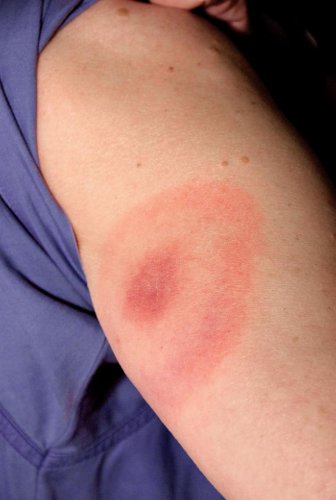
lyme_bullseye_rash

This image shows the bulls-eye rash that is a common symptom of most cases of Lyme disease in the diseases first phase.


Symptoms of Lyme disease


Symptoms from Lyme disease can become apparent 3-30 days following the bite of an infected tick. In some cases the symptoms are so mild those infected with the disease hardly take notice that something is wrong. Some people may have the well-known bulls-eye rash associated with Lyme disease. The bulls eye rash is called erythema migrans and expands in a red circle at the site where the tick was attached. Other symptoms of Lyme (sometimes called Lymes) disease include fever, headache, and muscle or joint pain. Many people will experience a fever and flu-like symptoms without a rash. Other symptoms such as joint pain, rashes on other parts of the body or inflammation of the heart or nerves can occur. If the disease is not treated, some patients may experience additional symptoms such as inflammation and excessive joint pain (Arthritis), neurological disorders and mental changes months after being infected.


The prognosis for Lyme disease is good if the disease is diagnosed early. Patients treated with appropriate antibiotics in the early stages of Lyme disease usually recover rapidly and completely. The longer the disease goes untreated the greater the risk of suffering from acute symptoms that can persist for years. This is called Post-Treatment Lyme Disease Syndrome which also called chronic Lyme disease. Acute Lyme disease can continue for years, even following repeated courses of antibiotics. In these cases Lyme disease can greatly affect your day-to-day activities and your quality of life as a whole.


Mosquito Squad of Columbia doesn

Mosquito Squad of Columbia doesn’t give mosquitoes or ticks a biting chance


How to reduce your risk of contracting Lyme disease


Our goal at Mosquito Squad of Columbia is to reduce the risk of coming into contact with a tick that could potentially be harboring any tick-borne illness.  Reducing your exposure to ticks is the best defense against Lyme disease. Utilizing a tick control and prevention program and exercising good tick practices when venturing into untreated areas is the first line of defense. We specialize in a tick prevention and control program that targets ticks during each stage of development. Our safe and effective barrier sprays eliminate adult ticks. Our barrier spray is used in conjunction with our tick tube program that targets the nymph tick. Tick tubes can reduce your chance of coming into contact with a tick on your treated property by up to 97%.


The crew at Mosquito Squad of Columbia

Contact us to learn how to control ticks and reduce the risk of contracting Lyme disease.


If you are interesting in learning more about our highly effective tick intensive control and prevention program contact Mosquito Squad of Columbia. When it comes to protecting your loved ones from ticks and the many diseases they carry an ounce of prevention is worth a pound of cure! Call us today for a free quote • (803) 345 – 7575 • email:Columbia@MosquitoSquad.com

Dogs and Lyme Disease

Lyme disease is spread by ticks, mainly deer ticks. Whenever you take your dog out hunting, you run the risk of him getting Lyme Disease due to ticks. This is especially true if you are hunting in the woods. Deer ticks are not the only ticks that can cause disease, however. It seems as if any part of the country that you live, you will find some sort of tick that can not only pose a danger to your dog, but to you as well.


The Lone Star Tick is one tick that can cause Ehrilichosis Disease and is primarily found in the Eastern part of the country. You can find the Lone Star Tick in Maine as well as Florida. It also can be found as west as Oklahoma. These will cause a rash that is very similar to Lyme Disease and can be usually found in meadows as well as young forests.


American Dog And Rocky Mountain Ticks are found throughout the country and will cause Rocky Mountain Spotted Fever in both humans and dogs. They can be found in grassy meadows, along trails and also in young forests. They are one of the few ticks that are not confined to wooded areas.


Brown Dog Tick is the most common tick and is found in 49 states. It can be in cracks in the cement around the house, dog runs, walls, in homes and even sandy areas. It can cause a variety of diseases that present very similar to Lyme Disease.


Deer Ticks are the ticks that are usually found in thick forests and are the cause of Lyme Disease. They are common in the Southern states as well as the Eastern states and the Midwest. Some Deer ticks have also begun to appear on the West Coast as well. They can also cause other conditions in addition to Lyme Disease.


Needless to say, you should protect yourself and your dog against Lyme disease as well as other diseases that come from ticks. For yourself, you should use light clothing so that you can actually see ticks on you and also use DEET repellent. For your dog, you should use K9 Advantix that is a product that will not only protect your dog from ticks, but also mosquitoes and fleas, that can also be problematic.


It is important to protect both yourself and your dog from Lyme Disease. Lyme Disease is often difficult to diagnose and can take a person a long time to recover. Dogs also require extensive treatment when it comes to Lyme Disease. The best way to treat Lyme disease is to prevent it. Other diseases that are born by ticks can also be problematic for you and your dog. By understanding about Lyme Disease and how you can prevent it from occurring, you are one step ahead of these ticks. Fortunately, there are products that you can use that can protect both you and your dog from contacting Lyme Disease.


Geoffrey A. English is the Founder of GundogsOnline.com, the Internet’s premiere online magazine dedicated to bird dogs. Visit their site for more information on training bird dogs and hunting dog supplies including a wide variety of dog leads, shooting glasses, and Marshall Radio dog tracking collars.


An Overview of Lyme Disease in Dogs

Lyme disease has been recognized in Europe for nearly a century but was not described in humans in the United States until 1975. We have since learned that clinical disease also occurs in dogs and, to a lesser extent, in horses, cattle, and cats, while many wildlife mammals and birds become subclinically infected and serve as reservoirs for tick infection. During the 1980s the disease incidence in both dogs and humans increased dramatically; Lyme disease is now the most common arthropod-borne disease of humans in the United States, and one of the most common in dogs.

What causes Lyme disease?


Lyme disease is caused by Borrelia burgdorferi, a corkscrew-shaped bacterium of the spirochete group. Among the spirochetes, it is most closely related to B. hermsii, which causes tick-borne relapsing fever in the southwestern United States. Better known but more distantly related spirochetes cause such diseases as leptospirosis and syphilis.


How is the disease transmitted?


Deer ticks, hard-shelled ticks of the genus Ixodes, transmit B. burgdorferiby attaching to and feeding on various hosts. Other bloodsucking insects may be involved, but there is little evidence that they are importantvectors. The primary way in which an animal or human becomes infected is by tick bite.


After a tick attaches and begins to feed, spirochetes residing in the midgut of the tick begin to migrate to the salivary glands and from there move into the host. The danger of infection increases when ticks are allowed to feed for prolonged periods and become engorged. There is believed to be little danger of infection during the first 12 hours of tick feeding. Beyond this point, risk of infection increases exponentially.


Ixodes ticks require three hosts and four different developmental steps to complete their two-year life cycle. The female ticks lay about 2000 eggs in the spring. The larvae that emerge from the eggs do not carry sufficient bacteria to induce infection. In the northeastern United States, the larvae feed mainly on the white-footed mouse, Peromyscus leucopus. Many infected mice harbor B. burgdorferi for long periods of time without developing disease themselves. The larvae become infected by ingesting the blood of persistently infected mice, then drop off the host and enter a resting stage for the winter.


The larvae molt into nymphs the following spring. Up to 25 percent of unfed nymphs in the northeastern United States are infected with B. burgdorferi. During spring and early summer the nymphs feed on new hosts, again white-footed mice or any of a wide range of animals, including dogs and humans. An infected nymph may infect its new host during the four-day feeding period. Conversely, an uninfected nymph becomes infected by feeding on a previously infected animal. Our studies of dogs indicate that nymphs are less effective vectors than adult ticks.


In the fall of the second year, nymphs molt again and enter the adult stage. An average of 50 percent of the adult ticks in infested areas of the Northeast may be carrying B. burgdorferi, and infected adult ticks are the most important source of infection for dogs. As long as temperatures remain above 2°C (35°F), adult ticks can be found on shrubs, where they are high enough off the ground to attach to the white-tailed deer and other larger animals.


Adult ticks mate on the host. Male ticks tend to stay on the host and die, but the females engorge for five to seven days and then drop off into the leaves, where they live through the winter. The following spring they lay eggs and complete the two-year cycle. Adult ticks that do not find a host in the fall may survive over the winter and become active again from early spring until about mid-May.


Discoveries by Cornell investigators indicate that exposure to B. burgdorferi-infected adult ticks in the fall and early spring months is more dangerous for dogs than exposure to infected nymphs later in the spring. Only repeated exposure to nymphs induces infection and disease.


In the southern United States, I. Scapularis larvae and nymphs feed primarily on lizards, which do not maintain infection with B. burgdorferi. Consequently, nymphal and adult infection rates are low, often less than one percent. Rates of infection with B. burgdorferi are also low (between one and five percent) in California.


What are the disease signs in dogs?


In contrast to human cases of Lyme disease, where three different stages are well known, Lyme disease in dogs is primarily and acute or subacute arthritis. The acute form may be transient and may recur in some cases. The devastating chronic stage in humans with systemic disease has rarely been seen in dogs.


Dogs show sudden lameness and sometimes signs of severe pain. One or more joints may be involved. Joints are often swollen, hot, and painful upon manipulation. Dogs may have fever and be off-feed and lethargic. Some become severely depressed and are reluctant to move. Lameness may recur after a period of recovery lasting several weeks.


Work at the Baker Institute has shown that the incubation period in dogs is longer than previously believed. Lameness in dogs occurs an average of two to five months after tick exposure.


The first stage of human Lyme disease, a skin rash called erythema chronica migrans, is rarely seen in dogs. Some symptoms associated with the later stages of Lyme disease in humans have also been reported in rare instances in dogs. They include heart block, kidney failure, and neurological changes such as seizures, aggression, and other behavior changes.


How likely is it that a dog will get Lyme disease?


The proportion of infected dogs that develop clinical disease is far smaller than it is for humans. Serological studies suggest that while more than 75 percent of the dog population in hyper-endemic areas may be exposed to infected ticks, only about five percent of those exposed actually develop clinical signs that might be attributable to Lyme disease. Within endemic areas, “hot spots” of tick infestation where dogs have a much greater probability of acquiring an infection are intermingled with non-infested areas where the habitat is not favorable to the vector tick. There may be age, breed, and genetic differences in the susceptibility of dogs to Lyme disease, but little is known yet about these factors.


Our studies indicate that bitches that become infected while pregnant do not transmit infection to their fetuses. Furthermore, our studies have shown no evidence that the pups of an infected bitch acquire the infection from her after birth.


How can Lyme disease in dogs be diagnosed?


There are several ways to examine the immune response of dogs to B. burgdorferi infection. The enzyme-linked immunsorbent assay (ELISA) performed by our collaborates in the Diagnostic Laboratory of the College of Veterinary Medicine is very useful if the dog has not yet been vaccinated against Lyme disease – many vaccinated dogs develop antibodies that the ELISA and other tests cannot distinguish from a dog’s antibody response to tick exposure. Our colleagues have found through ELISA testing that antibody can first be detected in dogs between four and six weeks after exposure to infected ticks. Antibody titers, which are the measurement of an immune response, increase for several weeks and then remain constant for at least 18 months in the absence of re-exposure. Despite high ELISA titers, viable B. burgdorferi organisms can be shown to persist in dogs for at least 18 months, the longest period studied. It is possible that antibody and organisms persist together in dogs for several years.


The western blot is a technique that determines antibodies against multiple antigens of B. burgdorferi. In dogs as in humans, this method can identify specific antibodies to the organism. The western blot can distinguish between dogs that have been or are infected with B. burgdorferi and dogs that have been vaccinated against Lyme disease. It can also detect the dog that has been both infected and vaccinated. While the ELISA is a quantitative determination of all the antibodies produced against many antigenic components of B. burgdorferi, the western blot determines the unique pattern of antibodies produced against antigens of a tick-induced infection, which is different than the pattern produced following vaccination.


There are now several kits available commercially that allow veterinarians to test for Lyme antibody in dogs without sending samples to diagnostic laboratories. However, well-controlled ELISAs and western blots run in reputable diagnostic laboratories are probably the most reliable option.

Is it possible to isolate the organism itself?


The definitive means for diagnosing bacterial infections is to isolate the causative organism. In veterinary and human studies, B. burgdorferi has been extremely difficult to culture from body fluids and tissues, apparently because of the lack of organisms in the samples. In our experimental studies, the only locus from which B. burgdorferi was consistently isolated over a period of several months after tick exposure was the site of bites by infected ticks. If the site of a tick bite is known, a skin biopsy from that area provides the best chance for successful isolation of the organism. Even if the area of the bite is not known, there is a better chance of isolating the organism from the skin, even from sites distant from the bite, than from the blood or urine. This approach is not recommended however, because isolation of the organism is time-consuming and expensive.


What are the criteria for diagnosing Lyme disease?


We consider four criteria important in establishing the diagnosis of Lyme disease in dogs:

History of exposure to ticks in an endemic area.

Typical clinical signs (lameness with or without fever).

A positive antibody test.

A prompt response to antibiotic therapy.


One or two of these criteria alone are usually not sufficient to confirm a diagnosis. For example, if a dog has never been in an area known to be infected with Ixodes ticks carrying B. burgdorferi, it is very unlikely that the dog will have Lyme disease. A diagnosis based on clinical signs often remains questionable, for there are several other conditions, such as immune-mediated disease and rheumatoid arthritis, that cause lameness and pain in dogs. A positive antibody titer alone tells very little. Many dogs with high antibody titers fail to have clinical signs. The presence of a specific type of antibody (IgM) is a good indicator of recent infection with some diseases, but in cases of Lyme disease, IgM antibodies persist. The diagnosis of Lyme disease is strengthened by a good response to antibiotic therapy, but other infectious diseases that mimic Lyme disease, such as Rocky Mountain spotted fever and Ehrlichia canis infection, also respond to antibiotics.

Can an infected dog be treated?


Antibiotics are the treatment of choice for Lyme disease in dogs, as in humans. Several tetracyclines, such as doxycycline, and penicillin-like antibiotics, including amoxicillin and ceftriaxone, are very effective. Tetracyclines should not be given to growing dogs. Because B. burgdorferihas the tendency to persist in dogs, antibiotics should be given for three or four weeks, even though a beneficial effect can be seen after a few days of treatment. The long duration of therapy is also warranted because of the very slow multiplication rate of the organism, which takes 12 hours or more to double in number, as opposed to the minutes in which most bacteria do the same. Considering the fact that Lyme disease appears to be self-limiting, the need for a long-duration therapy may be arguable. However, there are now reports that tetracyclines may have a direct ameliorating effect on arthritis.


Dogs with recurrent episodes of Lyme disease, whether acquired from reinfestation with infected ticks or a relapse from an initial infection, are highly responsive to antibiotics given at the same doses as for a primary episode. Humans in the chronic stage of Lyme disease do not respond as favorably to antibiotics as dogs do.


Corticosteroids and other anti-inflammatory drugs are sometimes used for treatment of Lyme disease in dogs. Although the initial result may be impressive, these drugs do not have a true healing effect and can mask the diagnostic value of antibiotic treatment.


Should antibiotic treatment be initiated on dogs found carrying Ixodes ticks?


The question is only relevant in endemic areas. If dogs are exposed frequently to ticks, treatment is impractical. Besides, infection of dogs only occurs after at least partial engorgement of ticks. The risk of infection, therefore, is greatly reduced if the ticks are removed from dogs on a daily basis. Because treatment in dogs is highly effective, many veterinarians initiate treatment only after the onset of clinical signs.


What is the prognosis for dogs with Lyme disease?


Dogs respond very well to antibiotic treatment. There may be recurrent disease, but dogs again respond well to treatment. Complete recovery can be expected in the vast majority of cases. As noted above, chronic disease, which can be devastating in humans, has rarely been seen in dogs. Furthermore, our studies have shown that dogs may recover spontaneously without antibiotic therapy.

Can humans get the disease from dogs?


Some have speculated that B. burgdorferi in the saliva or urine of infected dogs may be transmissible to humans. Experiments however have failed to provide any evidence of urine or saliva shed. Organisms are rarely found in the kidneys of infected dogs. Borrelia organisms also deteriorate quickly in the urine and saliva, and there is so far no evidence of human infection resulting from contact with dogs. It has also been speculated that dogs might carry home loosely attached infected ticks, which could then transfer to human hosts and induce infection. No such instance has been documented.


How can the disease be prevented?


There are two approaches to preventing infection in dogs. One is to limit tick engorgement on dogs by controlling the tick population, using tick repellents, and/or grooming daily. The other is vaccination.


Attempts to reduce the deer tick population by radically reducing the deer population, even by as much as 70 percent, have been only partially successful. Other wildlife can replace the deer as hosts, and efforts to reduce the population of white-footed mice are not feasible.


Selective chemical control of ticks appears to be more promising, although only relatively small areas can be covered. The Boston-based company Eco Health, Inc. has developed one approach, biodegradable tubes containing permethrine-treated cotton batting (Damminix®) that can be placed in infested areas. Mice use the cotton for nesting material. The acaricide-covered nesting material rapidly kills exposed I. scapularis larvae and nymphs. Contradictory reports have appeared about the effectiveness of this approach.


The Borrelia burgdorferi Bacterin from Ford Dodge Laboratories is currently the only licensed Lyme disease vaccine for dogs. Several million doses have been sold, and, other than transitory fever, dogs do not appear to have any immediate adverse reactions to its use. In a limited field study it was concluded that the incidence of disease (4.7 percent in infected, non-vaccinated dogs) was reduced to about one percent. However, the vaccine does not protect against actual infection. We do not yet have experimental data to show whether B. burgdorferi persisting in dogs vaccinated after tick exposure might cause later disease.


The fact that dogs showing antibody response only to vaccination, not to tick-induced vaccination, have been observed to develop classical signs of Lyme disease may indicate that the risk of vaccination with the whole-cell bacterin is greater than previously thought. If only one or two percent of vaccinated dogs in endemic areas experience this phenomenon, the possible advantages of the vaccine, which is reported to reduce cases of Lyme disease from about four and one-half percent to one percent of dogs at risk, would probably be offset by the risk of its use. However, the basis for the observation that vaccinated dogs develop Lyme disease is not understood and must be investigated further before firm conclusions can be drawn.


We cannot recommend vaccination of dogs in endemic areas with the whole-cell bacterin until questions are resolved about clinical Lyme disease developing in dogs that have been properly vaccinated. The risk of not vaccinating is minimal since the disease in dogs is probably self-limiting in the majority of cases and is effectively treated with antibiotics, even in cases of recurrent disease. Furthermore, the risk of ever developing clinical Lyme disease appears to be relatively low.


A recent vaccine trial at the Baker Institute furnished strong preliminary evidence that a distinctly different approach to vaccination is effective in protecting dogs against subsequent exposure to Lyme disease. Task force member Dr. Yung-Fu Chang engineered a recombinant preparation of Osp A, an outer surface protein of B. burgdorferi, in the common bacterium E. coli. Osp A holds promise as a human vaccine as well as a canine vaccine. Further study will be needed to confirm our findings.

2013年9月23日星期一

Tracking Lyme Disease in Dogs May Help Protect Humans


By Steven Reinberg
HealthDay Reporter


WEDNESDAY, Aug. 10 (HealthDay News) — Tracking Lyme disease infections in dogs may help scientists predict possible outbreaks of the tick-borne illness in humans, government researchers report.


Since dogs are also susceptible to Lyme disease, they can be a good indicator of the risk of human infection, the scientists from the U.S. Centers for Disease Control and Prevention said. When blood tests show that few dogs in a given area carry the bacteria, the risk to people is relatively low, they noted. Conversely, when more dogs test positive for Lyme, people may be at increased risk, they noted.


“Public health authorities could use this to assess and evaluate changes in their region,” said Dr. Gary P. Wormser, chief of infectious diseases at New York Medical College and Westchester Medical Center in Valhalla. “This could be of help in understanding the risk areas for humans.”


The report, released Aug. 10, is published in the September issue of the CDC journal Emerging Infectious Diseases.


For the study, a team led by Dr. Paul Mead, a CDC medical epidemiologist, used data from 46 states on human and canine Lyme disease prevalence.


Comparing the data, Mead’s team found that when 1 percent or less of the dogs tested positive for Lyme disease, the risk of people becoming infected was low. However, when more than 5 percent of the dogs were infected, the risk to people was high.


A 5 percent (or higher) rate of positive blood test results in dogs “can be a sensitive but nonspecific marker of increased risk for human Lyme disease,” the researchers wrote in a CDC news release. “Because dogs do not transmit infection directly to humans [or humans to dogs], this association reflects similar susceptibilities to tick-borne infection.”


Sometimes, this level of canine infection “appears to anticipate increasing rates of human infection at the county level. Conversely, canine [prevalence of 1 percent or less] is associated with little to no local risk for human infection,” Mead’s group concluded.


Blood tests can detect a dog’s exposure to the bacteria, even when no symptoms appear. “Most of the time the dogs appear to be asymptomatic, but they do develop clinical disease as well,” Wormser said. As a result, they may develop problems walking and possibly heart or kidney complications.


Like humans, dogs with the disease can be treated with antibiotics. “There is also a vaccine for dogs,” Wormser said. Symptoms may abate without treatment, but Lyme disease can leave recurrent lameness.


Commenting on the study, Phillip J. Baker, executive director of the American Lyme Disease Foundation, said, “You have to wonder if a dog is a good sentinel animal.”


Their travel history and the use of tick repellent can affect estimates of Lyme disease prevalence in a specific area, he explained.


To prevent being bitten by the deer tick, which spreads Lyme disease, Baker advises checking your pet (and yourself) after walking through woods, fields or tall grass. Many dog owners also use tick repellent on their pets, he said.


Areas where cattle and goats are raised may have a reduced risk of Lyme disease, according to another study in the same journal issue.


Researchers from Charite Universitatsmedizin Berlin in Germany found pastures containing livestock bore fewer ticks in general and fewer ticks carrying Lyme disease. Hikers passing through these pastures were 40 to 54 times less likely to contract Lyme disease than those walking through meadows or fallow land, they said.


It’s possible that grazing animals reduce the tick’s habitat or perhaps the ticks shed the Lyme disease bacteria when they feed on animals, the researchers said.


“Extensive landscape management that uses domestic ruminants not only serves to maintain cultural and natural heritage in Germany but also seems to confer a health benefit for hikers and others seeking recreation,” the researchers wrote in the CDC news release.


More information


For more on Lyme disease, visit the U.S. National Library of Medicine.


SOURCES: Gary P. Wormser, M.D., chief, infectious diseases, New York Medical College and Westchester Medical Center, Valhalla, N.Y.; Phillip J. Baker, Ph.D., executive director, American Lyme Disease Foundation, Lyme, Conn.; September 2011 Emerging Infectious Diseases


Last Updated: Aug. 10, 2011


Copyright © 2011 HealthDay. All rights reserved.


2013年9月22日星期日

Lyme Disease and Immune-Mediated Thrombocytopenia in Dogs

My dog Daisy turned the ripe old age of 14 in November, much to my great joy.  We had a rough summer that began in June when she tested positive for Lyme Disease.  What was worse, she had tested positive the previous June; however, the veterinarian never informed me of that test result.  He had said he would only call me if there was something wrong.  So when I never heard from him, I thought that “no news was good news.”  Needless to say, I was furious with the vet’s careless oversight and switched to another veterinarian within the same practice.  Unfortunately, Daisy had the infection in her system for a whole year before she began treatment with doxycycline.  But I remained hopeful.


I have been much happier with our new vet because he took time to explain Daisy’s health issues so that I understood them, and he made sound recommendations that were not rooted in how much money he could make for the practice.  In addition to the Lyme, Daisy’s blood test revealed that her blood platelet count was unusually low, around 84,000.  A follow-up test a week later showed they had dropped to 58,000.  The  normal range is between 200,000 and 500,000.  After a bone marrow aspirate revealed Daisy did not have leukemia, our new vet diagnosed Daisy with Immune-Mediated Thrombocytopenia, also called Idiopathic Thrombocytopenic Purpura (ITP), a disease that destroys existing blood platelets and hinders the development of new platelets.  Platelets help stop bleeding by forming clots.  Basically, Daisy’s immune system got confused (likely because of the Lyme Disease) and started attacking her blood platelets.


Daisy was placed on a twice daily dose of 20 mg of prednizone, which she remained on for three months.  Each month during the summer, I took her for a platelet check.  And each blood test showed that her blood platelet count had recovered and was in the normal range.  What concerned me, however, was that Daisy had dropped a lot of weight over the summer.  Once a solid 40 pounds, she had dropped to 34 pounds by late July.  I began feeding her three cups of kibble a day, as opposed to her regular 2 cups.  Being on the prednizone made her hungry, so she happily ate her third meal.  She was also very thirsty, and I had to replenish her water bowl more frequently.  But slowly, she began to put the weight back on.


In September, we began to wean her off the prednizone.  She went down to 10 mg twice a day, then 10 mg once a day throughout October, then 5 mg a day in November, to 5 mg every other day in December.  Each month, I brought her in for a blood platelet check.  And each month, Daisy’s platelet count remained steady.  She was in remission, and by December, Daisy weighed a healthy 43 pounds!  She is now off the prednizone completely, and her most recent blood platelet test result (1/12) showed that her platelet count is in the normal range.  I’ll probably have her checked again in one month to be safe.  God willing, Daisy and I will have many more months together; perhaps she’ll see her 15th birthday?


As an elderly dog, Daisy sleeps a lot more now.  She doesn’t hear as well as she used to–I have to be careful not to startle her.  Her teeth are in bad shape, and her breath is consistently foul, but it doesn’t bother me that much.  She has stiffness in her hips and is reluctant to jump up onto the couch or into the backseat of the car.  I am sure that her bout with Lyme Disease and the Thrombocytopenia has taken a toll on her joints.  But she’s happy and here, and for that I am thankful.


If I could offer one piece of advice to pet owners, it is this: ALWAYS have your vet call you with your pet’s blood test results, even if all is well.  A “no news is good news” practice leaves too much room for error.  And if you don’t hear from your vet, be sure to give them a follow-up call.  The old saying is true: the squeaky wheel gets the oil.